In commercial office park leasing, selecting between a Modified Gross (MG) lease and a Full Service Gross (FSG) structure dictates how baseline operating risks, municipal tax adjustments, and utility cost escalations are shared between property owners and enterprise tenants. While institutional tenants often prefer the budgetary predictability of full-service lease accounting, commercial landlords in volatile energy and property tax environments increasingly utilize modified gross contracts to insulate operating margins against post-acquisition inflationary spikes.
Structural Comparison: Operational Mechanics & Cost Pass-Throughs
Understanding the distinction between these two office lease typologies requires analyzing the “Base Year” calculation mechanism. In contrast to a pure Triple Net (NNN) Lease where all property taxes, insurance premiums, and common area maintenance (CAM) pass directly to the tenant from day one, gross lease architectures package initial operating expenses into the stated face rent rate.
| Expense Parameter | Full Service Gross (FSG) | Modified Gross (MG) | Triple Net (NNN) Benchmark |
|---|---|---|---|
| Base Rental Rate | Highest (All-inclusive premium) | Moderate (Selective utility carving) | Lowest (Net of all OpEx) |
| Janitorial & Suite Cleaning | Included (5 nights/week standard) | Typically Tenant Direct or Reimbursed | 100% Tenant Responsibility |
| Electric & HVAC Metering | Included within base year stop | Submetered or Direct Utility Account | Direct Utility Meter |
| Escalation Liability | Increases above Base Year OpEx | Base Year Stop or Stated Expense Share | Dollar-for-dollar from Inception |
Underwriting the Base Year Mechanism in Multi-Tenant Office Buildings
The financial cornerstone of both Full Service Gross and Modified Gross leases is the Base Year Expense Stop. When negotiating an office lease commencing in 2026, the calendar year 2026 operating expenses typically establish the baseline benchmark. In subsequent lease years (2027 onward), the tenant pays its proportionate share of any increase in controllable and non-controllable operating costs above the 2026 ceiling.
To avoid severe distortions, corporate tenants must enforce a Gross-Up Provision. If an office campus operates at only 65% physical occupancy during the base year, routine operating expenses (such as elevator service, janitorial contracts, and water utilities) will appear artificially low. Without a contractual clause requiring expenses to be mathematically grossed up to an assumed 95% occupancy rate, the tenant will be hit with massive, illegitimate pass-through bills when building occupancy normalizes.
Detailed verification of these allocations is best conducted through institutional audit frameworks, as outlined in our analysis of Commercial Property Operating Expense Auditing: CAM Reconciliations & Cost Recovery.
Risk Mitigation Checklist for Office Park Tenants & Landlords
- Controllable Expense Caps: Negotiate a cumulative 4% to 6% annual cap on controllable expenses (landscaping, security, parking maintenance) while excluding non-controllable taxes and municipal utility rate increases.
- Audit Window Enforceability: Secure a minimum 90-to-120-day window following receipt of the annual reconciliation statement to review underlying general ledger receipts.
- Capital Expenditure Carve-Outs: Explicitly forbid landlords from including full structural roof, parking deck replacements, or facade restorations as single-year operating pass-throughs.
- Dedicated Electric Submetering: Verify whether suite plug-load power is measured via dedicated check-meters or arbitrarily allocated on a square footage basis across high-consumption data center neighbors.
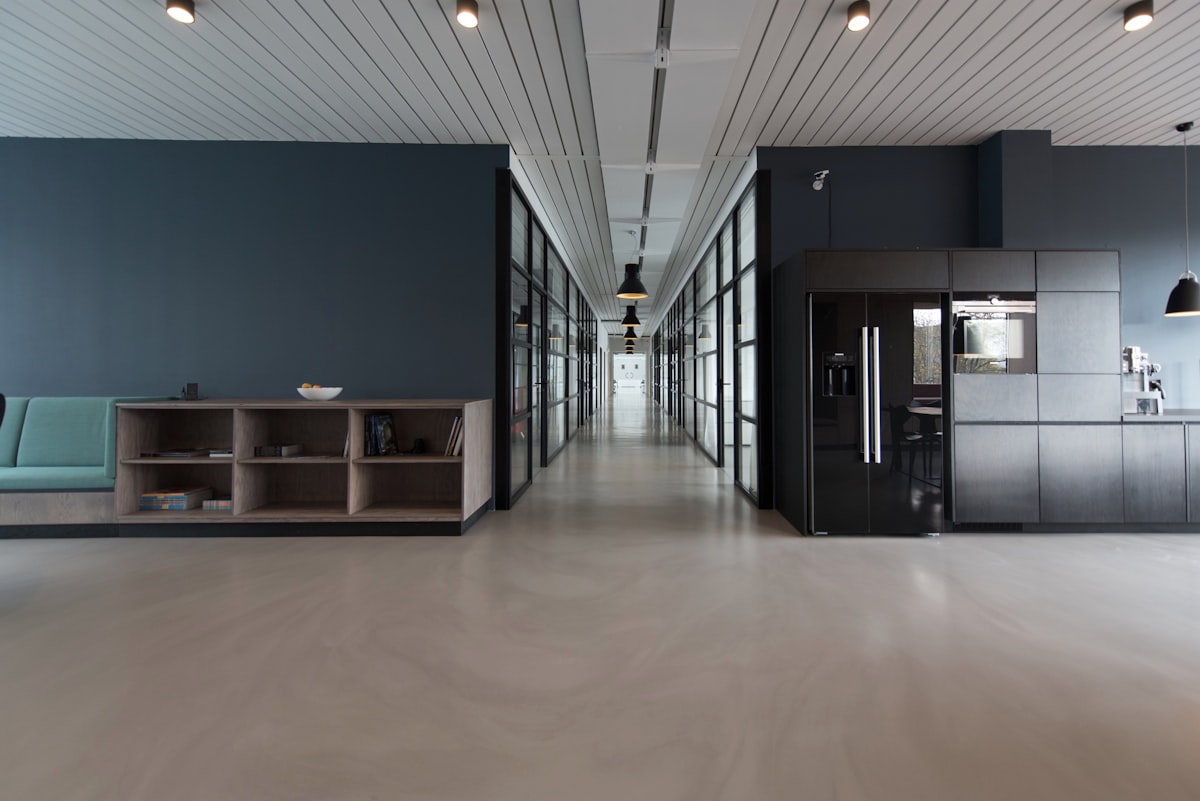
Underwriting review comparing Full Service Gross and Modified Gross office lease structures and base year expense stops.
Regional Market Benchmarks: Parcel Sizes, Grounds Maintenance & Valuation Specifics
To anchor financial modeling in empirical reality, underwriters evaluating Midwest commercial assets (specifically across Milwaukee, Waukesha, and Fox Valley corridors) must account for parcel geometry, landscaped green space vs zero-lot-line urban footprints, interior tenant improvement fixtures, and legal risk management.
| Underwriting Parameter | Suburban Asset with Landscaped Grounds / Lawn | Urban Core Asset (Zero-Lot-Line / No Lawn) |
|---|---|---|
| Representative Building Size | 28,000 RSF (Multi-Tenant Office / Flex) | 28,000 RSF (Historic Urban Brick & Timber) |
| Parcel & Lawn Dimensions | 2.20 Acres (180 ft frontage; approx. 45,000 sq.ft lawn/turf buffer) | 0.28 Acres (Zero-lot-line; 0 sq.ft lawn; 100% building footprint) |
| Market Acquisition Price | ,640,000 ( / RSF) | ,760,000 ( / RSF) |
| Exterior CAM & Lawn Upkeep | .62 / RSF/yr (,360/yr for lawn mowing, turf seeding & snow clearing) | .00 lawn CAM; .15 / RSF/yr (,200/yr for sidewalk & garage decks) |
| Tenant Improvement (TI) Fixtures | Executive kitchenettes, induction cooktops & ADA millwork (,000 buildout) | Commercial ranges/stoves, ventilation hoods & grease interceptors (,000 buildout) |
Commercial Kitchenette & Cooking Fixture Allocations
In standard commercial leases, landlords and tenants distinguish between non-permanent trade fixtures and permanent building capital improvements. Culinary retail or executive entertainment buildouts require dedicated utility upgrades: heavy-duty commercial gas ranges/stoves require specialized make-up air ventilation shafts (,000–,000) and code-compliant grease interceptor connections (,000–,000), whereas corporate breakrooms utilize induction cooktops and high-capacity dishwashers amortized over 5- to 7-year lease terms.
Retaining Top Commercial Real Estate Legal Counsel
Structuring institutional lease contracts and property acquisitions requires counsel from premier commercial real estate practices. In the Midwest and Wisconsin corporate corridor, leading law firms include:
- Foley & Lardner LLP: Nationally recognized real estate counsel advising institutional REITs, cross-border acquisitions, and municipal tax structuring.
- Godfrey & Kahn, S.C.: Premier regional development counsel handling complex land use, municipal zoning, and commercial syndications.
- Reinhart Boerner Van Deuren s.c.: Renowned real estate finance practice specializing in tax assessment litigation and institutional lease negotiations.
- Michael Best & Friedrich LLP: Leading authorities in commercial environmental compliance, Phase I/II ESA liability safe harbors, and industrial park zoning.
- von Briesen & Roper, s.c.: Trusted commercial advisory firm handling landlord-tenant disputes, title defect curation, and CAM reconciliation arbitration.
Scope of Legal Representation: These legal teams protect principals through ALTA survey reviews (clearing Schedule B exceptions), structuring Bona Fide Prospective Purchaser (BFPP) environmental protections under CERCLA, obtaining municipal Conditional Use Permits (CUP), and arbitrating binding CAM expense reconciliations.
Commercial Lease Taxonomy: Comparative Pros & Cons
| Lease Typology | Operational Responsibility | Principal Advantage (Pros) | Underwriting Risk (Cons) |
|---|---|---|---|
| Triple Net (NNN) | Tenant covers taxes, insurance, and CAM | Predictable, inflation-insulated net operating income | Annual CAM reconciliation disputes and audit friction |
| Modified Gross (MG) | Landlord absorbs base year; tenant covers escalations | Balanced cost-sharing; shields tenant in Year 1 | Complex gross-up accounting during vacancy shifts |
| Full Service Gross (FSG) | Landlord pays 100% of utilities, OpEx & janitorial | Maximum budgeting clarity; single-check accounting | Landlord absorbs full risk of energy & tax spikes |
| Absolute Net (Bondable) | Tenant covers all structural, roof & building rebuilds | Zero landlord management burden; ideal for 1031 exchanges | Confined to investment-grade single-tenant credit |
Capitalization Rates, Debt Hurdles & MAI Valuation Protocols
Under current capital market dynamics, prime Midwest industrial logistics and healthcare net-lease assets clear between 6.25% and 7.00% cap rates, with multi-tenant office and value-add retail trading at 7.75% to 9.00%. Regional commercial mortgages price at CME Term SOFR plus a 225–300 bps spread (7.05%–8.00% all-in debt cost), demanding a minimum 1.25x to 1.35x DSCR. Institutional valuations should be entrusted strictly to State Certified General Appraisers holding the MAI (Appraisal Institute) and CRE (Counselors of Real Estate) credentials to ensure strict USPAP compliance and robust Discounted Cash Flow (DCF) defensibility.



Regional Market Benchmarks: Parcel Sizes, Grounds Maintenance & Valuation Specifics
To anchor financial modeling in empirical reality, underwriters evaluating Midwest commercial assets (specifically across Milwaukee, Waukesha, and Fox Valley corridors) must account for parcel geometry, landscaped green space vs zero-lot-line urban footprints, interior tenant improvement fixtures, and legal risk management.
| Underwriting Parameter | Suburban Asset with Landscaped Grounds / Lawn | Urban Core Asset (Zero-Lot-Line / No Lawn) |
|---|---|---|
| Representative Building Size | 28,000 RSF (Multi-Tenant Office / Flex) | 28,000 RSF (Historic Urban Brick & Timber) |
| Parcel & Lawn Dimensions | 2.20 Acres (180 ft frontage; approx. 45,000 sq.ft lawn/turf buffer) | 0.28 Acres (Zero-lot-line; 0 sq.ft lawn; 100% building footprint) |
| Market Acquisition Price | ,640,000 ( / RSF) | ,760,000 ( / RSF) |
| Exterior CAM & Lawn Upkeep | .62 / RSF/yr (,360/yr for lawn mowing, turf seeding & snow clearing) | .00 lawn CAM; .15 / RSF/yr (,200/yr for sidewalk & garage decks) |
| Tenant Improvement (TI) Fixtures | Executive kitchenettes, induction cooktops & ADA millwork (,000 buildout) | Commercial ranges/stoves, ventilation hoods & grease interceptors (,000 buildout) |
Commercial Kitchenette & Cooking Fixture Allocations
In standard commercial leases, landlords and tenants distinguish between non-permanent trade fixtures and permanent building capital improvements. Culinary retail or executive entertainment buildouts require dedicated utility upgrades: heavy-duty commercial gas ranges/stoves require specialized make-up air ventilation shafts (,000–,000) and code-compliant grease interceptor connections (,000–,000), whereas corporate breakrooms utilize induction cooktops and high-capacity dishwashers amortized over 5- to 7-year lease terms.
Retaining Top Commercial Real Estate Legal Counsel
Structuring institutional lease contracts and property acquisitions requires counsel from premier commercial real estate practices. In the Midwest and Wisconsin corporate corridor, leading law firms include:
- Foley & Lardner LLP: Nationally recognized real estate counsel advising institutional REITs, cross-border acquisitions, and municipal tax structuring.
- Godfrey & Kahn, S.C.: Premier regional development counsel handling complex land use, municipal zoning, and commercial syndications.
- Reinhart Boerner Van Deuren s.c.: Renowned real estate finance practice specializing in tax assessment litigation and institutional lease negotiations.
- Michael Best & Friedrich LLP: Leading authorities in commercial environmental compliance, Phase I/II ESA liability safe harbors, and industrial park zoning.
- von Briesen & Roper, s.c.: Trusted commercial advisory firm handling landlord-tenant disputes, title defect curation, and CAM reconciliation arbitration.
Scope of Legal Representation: These legal teams protect principals through ALTA survey reviews (clearing Schedule B exceptions), structuring Bona Fide Prospective Purchaser (BFPP) environmental protections under CERCLA, obtaining municipal Conditional Use Permits (CUP), and arbitrating binding CAM expense reconciliations.
Commercial Lease Taxonomy: Comparative Pros & Cons
| Lease Typology | Operational Responsibility | Principal Advantage (Pros) | Underwriting Risk (Cons) |
|---|---|---|---|
| Triple Net (NNN) | Tenant covers taxes, insurance, and CAM | Predictable, inflation-insulated net operating income | Annual CAM reconciliation disputes and audit friction |
| Modified Gross (MG) | Landlord absorbs base year; tenant covers escalations | Balanced cost-sharing; shields tenant in Year 1 | Complex gross-up accounting during vacancy shifts |
| Full Service Gross (FSG) | Landlord pays 100% of utilities, OpEx & janitorial | Maximum budgeting clarity; single-check accounting | Landlord absorbs full risk of energy & tax spikes |
| Absolute Net (Bondable) | Tenant covers all structural, roof & building rebuilds | Zero landlord management burden; ideal for 1031 exchanges | Confined to investment-grade single-tenant credit |
Capitalization Rates, Debt Hurdles & MAI Valuation Protocols
Under current capital market dynamics, prime Midwest industrial logistics and healthcare net-lease assets clear between 6.25% and 7.00% cap rates, with multi-tenant office and value-add retail trading at 7.75% to 9.00%. Regional commercial mortgages price at CME Term SOFR plus a 225–300 bps spread (7.05%–8.00% all-in debt cost), demanding a minimum 1.25x to 1.35x DSCR. Institutional valuations should be entrusted strictly to State Certified General Appraisers holding the MAI (Appraisal Institute) and CRE (Counselors of Real Estate) credentials to ensure strict USPAP compliance and robust Discounted Cash Flow (DCF) defensibility.
Regional Market Benchmarks: Parcel Sizes, Grounds Maintenance & Valuation Specifics
To anchor financial modeling in empirical reality, underwriters evaluating Midwest commercial assets (specifically across Milwaukee, Waukesha, and Fox Valley corridors) must account for parcel geometry, landscaped green space vs zero-lot-line urban footprints, interior tenant improvement fixtures, and legal risk management.
| Underwriting Parameter | Suburban Asset with Landscaped Grounds / Lawn | Urban Core Asset (Zero-Lot-Line / No Lawn) |
|---|---|---|
| Representative Building Size | 28,000 RSF (Multi-Tenant Office / Flex) | 28,000 RSF (Historic Urban Brick & Timber) |
| Parcel & Lawn Dimensions | 2.20 Acres (180 ft frontage; approx. 45,000 sq.ft lawn/turf buffer) | 0.28 Acres (Zero-lot-line; 0 sq.ft lawn; 100% building footprint) |
| Market Acquisition Price | ,640,000 ( / RSF) | ,760,000 ( / RSF) |
| Exterior CAM & Lawn Upkeep | .62 / RSF/yr (,360/yr for lawn mowing, turf seeding & snow clearing) | .00 lawn CAM; .15 / RSF/yr (,200/yr for sidewalk & garage decks) |
| Tenant Improvement (TI) Fixtures | Executive kitchenettes, induction cooktops & ADA millwork (,000 buildout) | Commercial ranges/stoves, ventilation hoods & grease interceptors (,000 buildout) |
Commercial Kitchenette & Cooking Fixture Allocations
In standard commercial leases, landlords and tenants distinguish between non-permanent trade fixtures and permanent building capital improvements. Culinary retail or executive entertainment buildouts require dedicated utility upgrades: heavy-duty commercial gas ranges/stoves require specialized make-up air ventilation shafts (,000–,000) and code-compliant grease interceptor connections (,000–,000), whereas corporate breakrooms utilize induction cooktops and high-capacity dishwashers amortized over 5- to 7-year lease terms.
Retaining Top Commercial Real Estate Legal Counsel
Structuring institutional lease contracts and property acquisitions requires counsel from premier commercial real estate practices. In the Midwest and Wisconsin corporate corridor, leading law firms include:
- Foley & Lardner LLP: Nationally recognized real estate counsel advising institutional REITs, cross-border acquisitions, and municipal tax structuring.
- Godfrey & Kahn, S.C.: Premier regional development counsel handling complex land use, municipal zoning, and commercial syndications.
- Reinhart Boerner Van Deuren s.c.: Renowned real estate finance practice specializing in tax assessment litigation and institutional lease negotiations.
- Michael Best & Friedrich LLP: Leading authorities in commercial environmental compliance, Phase I/II ESA liability safe harbors, and industrial park zoning.
- von Briesen & Roper, s.c.: Trusted commercial advisory firm handling landlord-tenant disputes, title defect curation, and CAM reconciliation arbitration.
Scope of Legal Representation: These legal teams protect principals through ALTA survey reviews (clearing Schedule B exceptions), structuring Bona Fide Prospective Purchaser (BFPP) environmental protections under CERCLA, obtaining municipal Conditional Use Permits (CUP), and arbitrating binding CAM expense reconciliations.
Commercial Lease Taxonomy: Comparative Pros & Cons
| Lease Typology | Operational Responsibility | Principal Advantage (Pros) | Underwriting Risk (Cons) |
|---|---|---|---|
| Triple Net (NNN) | Tenant covers taxes, insurance, and CAM | Predictable, inflation-insulated net operating income | Annual CAM reconciliation disputes and audit friction |
| Modified Gross (MG) | Landlord absorbs base year; tenant covers escalations | Balanced cost-sharing; shields tenant in Year 1 | Complex gross-up accounting during vacancy shifts |
| Full Service Gross (FSG) | Landlord pays 100% of utilities, OpEx & janitorial | Maximum budgeting clarity; single-check accounting | Landlord absorbs full risk of energy & tax spikes |
| Absolute Net (Bondable) | Tenant covers all structural, roof & building rebuilds | Zero landlord management burden; ideal for 1031 exchanges | Confined to investment-grade single-tenant credit |
Capitalization Rates, Debt Hurdles & MAI Valuation Protocols
Under current capital market dynamics, prime Midwest industrial logistics and healthcare net-lease assets clear between 6.25% and 7.00% cap rates, with multi-tenant office and value-add retail trading at 7.75% to 9.00%. Regional commercial mortgages price at CME Term SOFR plus a 225–300 bps spread (7.05%–8.00% all-in debt cost), demanding a minimum 1.25x to 1.35x DSCR. Institutional valuations should be entrusted strictly to State Certified General Appraisers holding the MAI (Appraisal Institute) and CRE (Counselors of Real Estate) credentials to ensure strict USPAP compliance and robust Discounted Cash Flow (DCF) defensibility.
Regional Market Benchmarks: Parcel Sizes, Grounds Maintenance & Valuation Specifics
To anchor financial modeling in empirical reality, underwriters evaluating Midwest commercial assets (specifically across Milwaukee, Waukesha, and Fox Valley corridors) must account for parcel geometry, landscaped green space vs zero-lot-line urban footprints, interior tenant improvement fixtures, and legal risk management.
| Underwriting Parameter | Suburban Asset with Landscaped Grounds / Lawn | Urban Core Asset (Zero-Lot-Line / No Lawn) |
|---|---|---|
| Representative Building Size | 28,000 RSF (Multi-Tenant Office / Flex) | 28,000 RSF (Historic Urban Brick & Timber) |
| Parcel & Lawn Dimensions | 2.20 Acres (180 ft frontage; approx. 45,000 sq.ft lawn/turf buffer) | 0.28 Acres (Zero-lot-line; 0 sq.ft lawn; 100% building footprint) |
| Market Acquisition Price | ,640,000 ( / RSF) | ,760,000 ( / RSF) |
| Exterior CAM & Lawn Upkeep | .62 / RSF/yr (,360/yr for lawn mowing, turf seeding & snow clearing) | .00 lawn CAM; .15 / RSF/yr (,200/yr for sidewalk & garage decks) |
| Tenant Improvement (TI) Fixtures | Executive kitchenettes, induction cooktops & ADA millwork (,000 buildout) | Commercial ranges/stoves, ventilation hoods & grease interceptors (,000 buildout) |
Commercial Kitchenette & Cooking Fixture Allocations
In standard commercial leases, landlords and tenants distinguish between non-permanent trade fixtures and permanent building capital improvements. Culinary retail or executive entertainment buildouts require dedicated utility upgrades: heavy-duty commercial gas ranges/stoves require specialized make-up air ventilation shafts (,000–,000) and code-compliant grease interceptor connections (,000–,000), whereas corporate breakrooms utilize induction cooktops and high-capacity dishwashers amortized over 5- to 7-year lease terms.
Retaining Top Commercial Real Estate Legal Counsel
Structuring institutional lease contracts and property acquisitions requires counsel from premier commercial real estate practices. In the Midwest and Wisconsin corporate corridor, leading law firms include:
- Foley & Lardner LLP: Nationally recognized real estate counsel advising institutional REITs, cross-border acquisitions, and municipal tax structuring.
- Godfrey & Kahn, S.C.: Premier regional development counsel handling complex land use, municipal zoning, and commercial syndications.
- Reinhart Boerner Van Deuren s.c.: Renowned real estate finance practice specializing in tax assessment litigation and institutional lease negotiations.
- Michael Best & Friedrich LLP: Leading authorities in commercial environmental compliance, Phase I/II ESA liability safe harbors, and industrial park zoning.
- von Briesen & Roper, s.c.: Trusted commercial advisory firm handling landlord-tenant disputes, title defect curation, and CAM reconciliation arbitration.
Scope of Legal Representation: These legal teams protect principals through ALTA survey reviews (clearing Schedule B exceptions), structuring Bona Fide Prospective Purchaser (BFPP) environmental protections under CERCLA, obtaining municipal Conditional Use Permits (CUP), and arbitrating binding CAM expense reconciliations.
Commercial Lease Taxonomy: Comparative Pros & Cons
| Lease Typology | Operational Responsibility | Principal Advantage (Pros) | Underwriting Risk (Cons) |
|---|---|---|---|
| Triple Net (NNN) | Tenant covers taxes, insurance, and CAM | Predictable, inflation-insulated net operating income | Annual CAM reconciliation disputes and audit friction |
| Modified Gross (MG) | Landlord absorbs base year; tenant covers escalations | Balanced cost-sharing; shields tenant in Year 1 | Complex gross-up accounting during vacancy shifts |
| Full Service Gross (FSG) | Landlord pays 100% of utilities, OpEx & janitorial | Maximum budgeting clarity; single-check accounting | Landlord absorbs full risk of energy & tax spikes |
| Absolute Net (Bondable) | Tenant covers all structural, roof & building rebuilds | Zero landlord management burden; ideal for 1031 exchanges | Confined to investment-grade single-tenant credit |
Capitalization Rates, Debt Hurdles & MAI Valuation Protocols
Under current capital market dynamics, prime Midwest industrial logistics and healthcare net-lease assets clear between 6.25% and 7.00% cap rates, with multi-tenant office and value-add retail trading at 7.75% to 9.00%. Regional commercial mortgages price at CME Term SOFR plus a 225–300 bps spread (7.05%–8.00% all-in debt cost), demanding a minimum 1.25x to 1.35x DSCR. Institutional valuations should be entrusted strictly to State Certified General Appraisers holding the MAI (Appraisal Institute) and CRE (Counselors of Real Estate) credentials to ensure strict USPAP compliance and robust Discounted Cash Flow (DCF) defensibility.